



 82 / 95

Architecture of Israel #
119
|
November
2019
|
Architectural Offices 2 - continued article
page
english readers
Ami Ran
food for labor
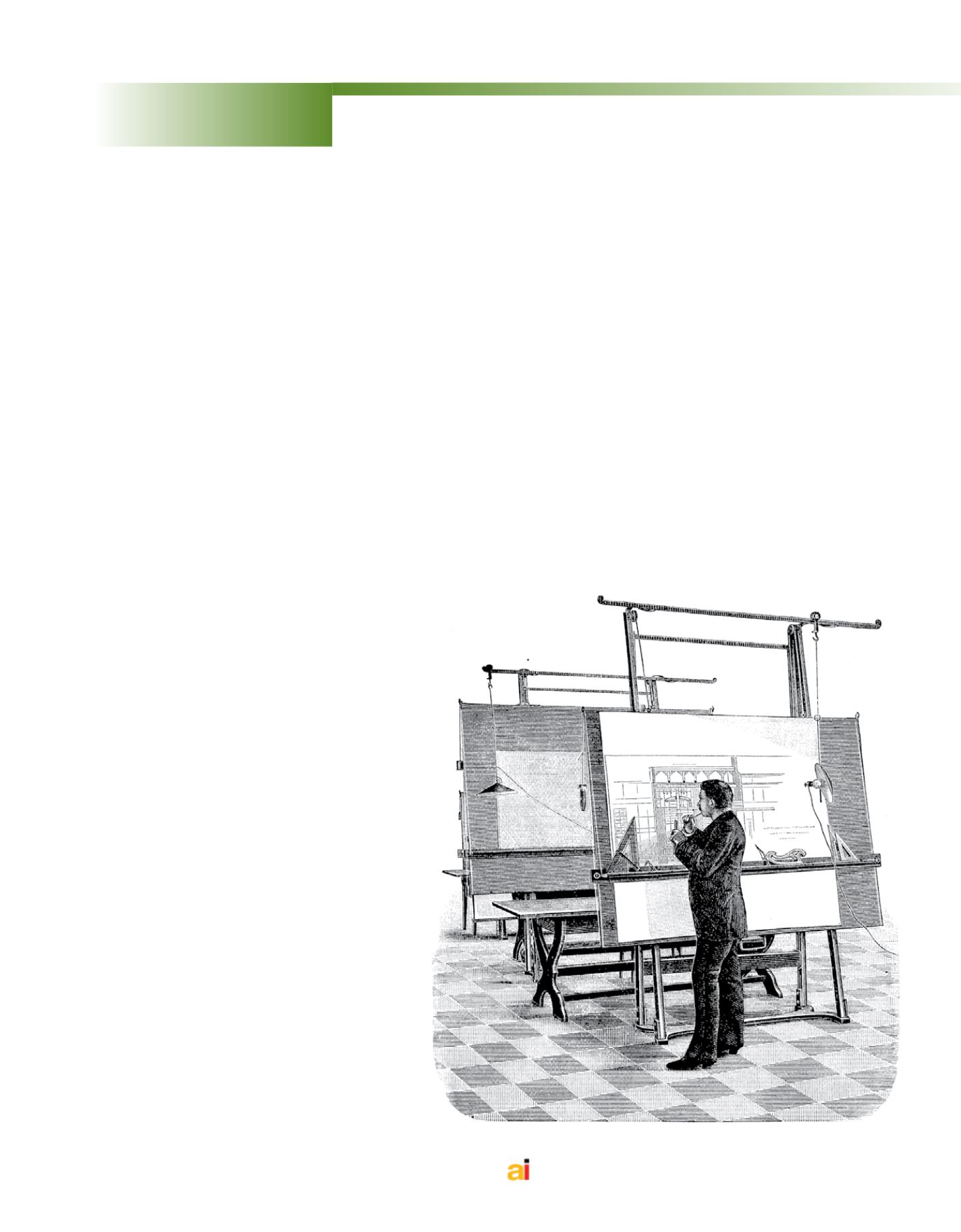
from the large drawing board
to the small laptop
Computerized planning, which put an end to the need for huge drawing-boards, has significantly
reduced architects’ office space, irrespective of the scope or nature of the projects. As a result,
the individual computer stand, as opposed to working in a group, has created a social vacuum
requiring compensatory seating corners, common dining rooms, leisure activities and even
gyms in the new architectural office.
In this context, many architects tend to call their modern offices “studios”, a romantic name
which originally meant “an artist’s working place, where he conducted a slow process of
learning the subject, usually in the company of several artists who enriched each other both
professionally and socially.
In our previous issue on the subject, we attempted to answer the question of how this affects
the organization of the new offices, most of which adopt a home-like characteristic, impacting
the nature of the projects and the architectural profession.
Since a prominent characteristic of the phenomenon constitutes a sharp transition from the
emotional to the rational due to the need to produce more in a shorter time, there is a notable
transition to industrial efficiency
at the expense of manual labor –
something that might be tiring, but is
filled with satisfaction, romance and
individual pride.
The success of the article and a
request for “more” from architects
as well as readers, brought about a
second article, in which we focus on
seven more architects offices – each
accompanied by a selected project
(or two) to illustrate its nature.
15