


 20 / 96

Architecture of Israel #
114
|
August
2018
|
Less or More
page
english readers
involvement underlying the above relate
to the term “meaning”. 19th century
German philosopher, Friedrich Daniel
Ernst Schleiermacher, argued that
understanding the term “meaning” is
actually the reconstruction of the writer’s
intention.
But, today, any knowledgeable scholar
knows that the cliché “what did the
poet mean” pales in comparison to the
question – “what do readers understand”,
particularly in terms of architecture that
strives for a long life.
While the first question is suitable for
researchers, what actually determines
the life of an artwork is the number of
layers it manages to reproduce in its
lifetime through readers' or observers'
interpretations long after the work
is completed. So it is with literature,
music, art and certainly architecture,
which constitutes a durable arena for
innumerable events, the most important
of which are created randomly without
any connection to the artist’s intention.
This perception utterly negates Friedrich
Daniel Ernst Schleiermacher’s argument,
whereby understanding the meaning is
a reconstruction of the artist’s intention,
when the invisible ‘less’ becomes ‘more’
and more in time.
In this context, space organization is
far more significant than the look of the
building. This is where the involvement
happens through discovering the hidden,
which is, according to the Sages – the
motivating component of life, and the
best way to involve the user in the act of
creation.
The best example I know of this approach
is poetic writing (as opposed to prose
writing), where the space between the
words requires the closing of gaps,
which delays the flow of thought, thereby
requiring the reader to engage in personal
involvement, reminding him of similar
situations (referred to extensively in the
77
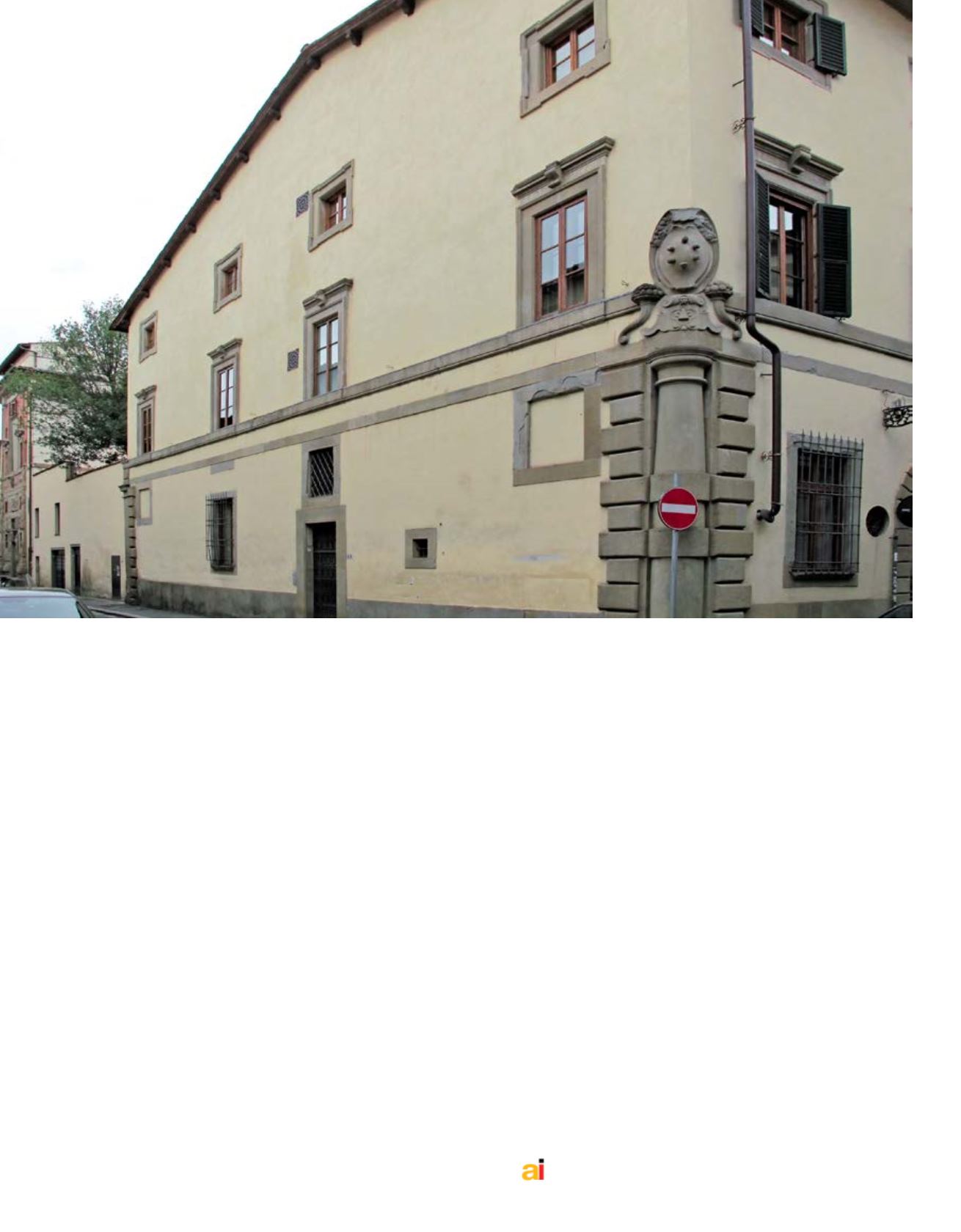
ביתו של הצייר הפלורנטיני אנדריאה דל
בעמוד זה:
סרטו, - גיבור המונולוג הדרמתי של ברואנינג שבו
מאה שנים לפני שמיס
,less is more
נוסח המשפט
ואן דר רוהה אימץ אותו.
ה״יד״ של לה-קורבוזיה, מופיעה
בעמוד השמאלי:
בבניינים שונים שלו כסמלו המסחרי, ללא כל הסבר
פונקציונלי בבניין.
article: Where exactly lies the poetic
dimension of architecture - AI #68).
History of architecture is loaded with
endless ways to illustrate the fact that
the more you invest in thinking, the less
you are required to invest in the building
process.
We have chosen to illustrate (most of)
the article with works by
Wespi de Meuron
Romero
Architects, in which - no matter
the style - less intervention is an outcome
of more architectural thought.