



 60 / 96

Design Patterns
Architecture of Israel #
109
|
May
2017
|
page
english
37
nearby family bathroom, while the parents’
one is piously dedicated to them alone.
Another common design pattern is the
kitchen, basically defined as a “space for
preparing food, cooking and eating”, with
the “golden triangle” dictating the functional
relationship between the sink, optimally
located near the infrastructure, the stove,
refrigerator and a work surface between
them, which lately takes on the shape of
an island, as part of modern life that has
turned the kitchen into a representational
space that includes a refrigerator the size of
a cabinet.
And as a result, the new social status of the
kitchen affects its proximity to the dining
room adjoining the living room, in order to
respond to the definition of
״
living space
״
,
usually separated from the bedrooms by a
corridor, at the end of which is the master-
bedroom, as mentioned - for privacy.
And - to go to an extreme - the location of
the building in the topography, since all this
requires the presence of a “foreign worker”,
who probably needs a separate room with
television and a shower in the basement,
that opens onto an English courtyard, with
illegal steps to allow a separate entrance.
Although the (inductive) claim that grows
from the part to the whole may be logically
invalid, such a line of thought may balance
the failures of the contemporary deductive
approach whereby individuals must adapt to
the whole. While the first expresses content,
the second is enslaved by form.
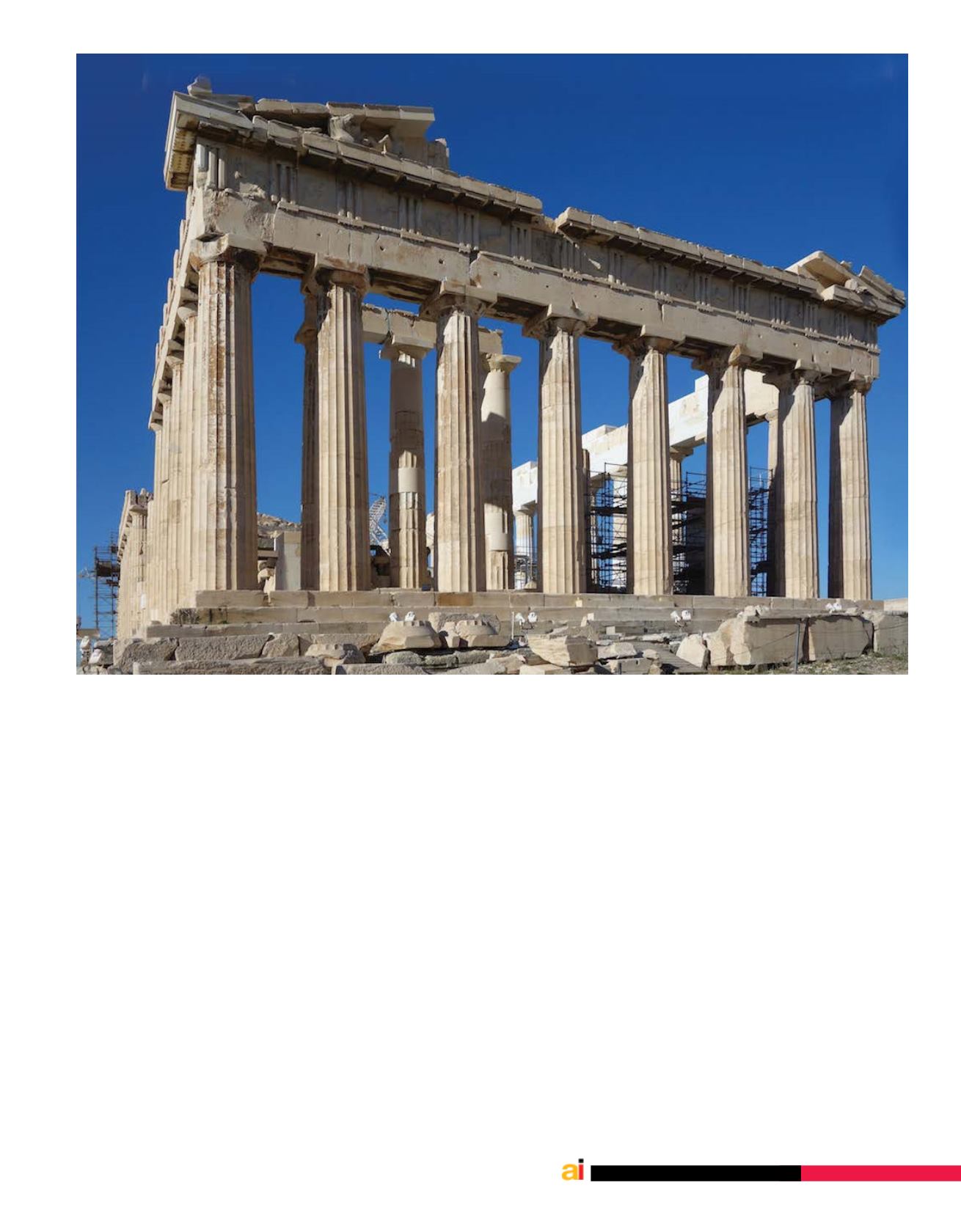
And, to descend from the philosophical
Olympus – the best known design patterns
are the Greek Orders, in the frame of which
innumerable buildings were constructed
throughout the world till today, and likewise
all the other identified styles of building:
Assyrian, Babylonian, Egyptian, Roman,
Byzantine, Renaissance, Romanesque,
Gothic, Modernist, Brutalist, Post-modern,
digital, and post digital – fundamentally, all
design patterns that are repeated in variable
contexts, needs, location and fashion.
האורדרים הקלסיים - תבניות עיצוב מוקפדות
שמשדרות אופי של מבנה שלטוני מכובד באמצעות
הקשרם הקונוטטיבי.
בעמוד הימני: הפרתנון באתונה נבנה במאה
החמישית לפניה״ס.
בעמוד השמאלי: בית המשפט העליון בוושינגטון,
.
Benjamin Henry Latrobe
על ידי
1935-
תוכנן ב