


 75 / 95

2019
אוגוסט
118
אדריכלות ישראלית
|
משרדי אדריכלים
75
|
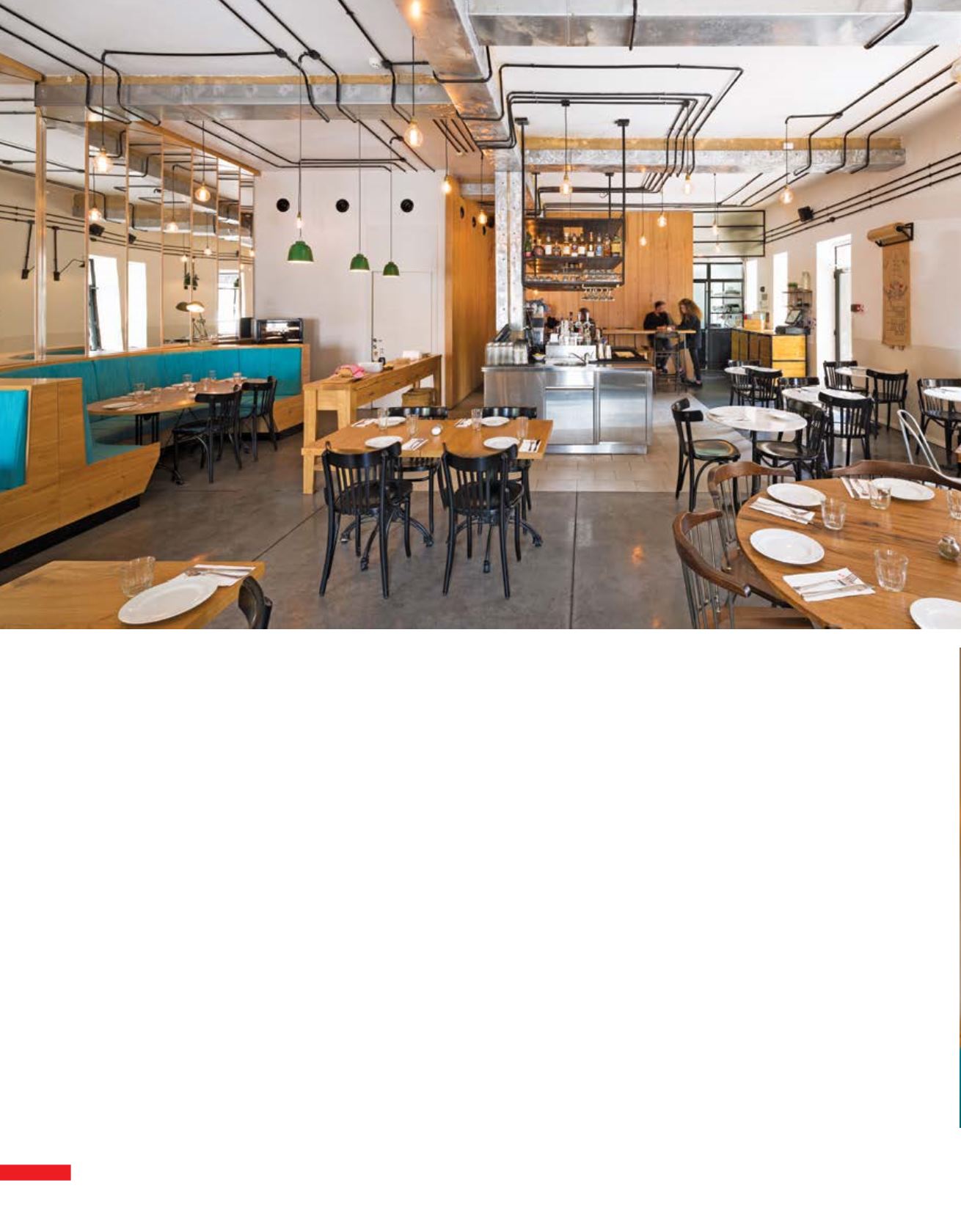
Manza - Bistro Restaurant, Bezalel
pedestrian mall, Jerusalem
Emphasizing the exposed infrastructure
systems, the design situates them as a
central aspect of the concept, creating a
dialogue between old and new, black and
white, function and decoration.
Unlike the conventional setting whereby the
bar counter divides kitchen and diners, here,
the bar counter is located as an island in the
center of the space, exposing the process of
drink preparation.
Design:
Sitton Plus Tannous Architecture.
Photo:
Uzi Porat.
All these constitute today basic factors
in the shared work projects, with the
intention of compensating for the social
deficits of anyone who makes his living
in front on a laptop, whether in a café, at
the beach, or even in a public park, while
the contact with environmental stimuli
provides creative inspiration.
It is important to emphasize the fact that
incredible buildings can be produced
today without personal involvement,
emotional inspiration and, ironically,
without great architectural experience,
diminishing the respect for outstanding
buildings, and consequently, the ability to
assess their creative value.
Since computerized architecture actually
yields similar products, a great many of
them are ostensibly planned in advance
by smart software programming, while
non-industrialized products differ from
each other, so one may say that the
real meaning of the computerized office
entails a loss of personal identity. In other
words, buildings today lack the romantic
dimension.
In this context, many architects tend to
define their modern office as a "studio",
which in Latin means "an artist’s work
space"; the place where he creates in
a trial and error process, usually in the
company of several mutually enriching
colleagues.
The sharp transition from the emotional to
the rational actually puts the architectural
profession on a feeling "diet" - a situation
where the need to produce much in a short
time, is preferred to achieving less of what
is valuable. Something, albeit exhausting,
that is filled with self-satisfaction, romantic
patina and long lost pride.
Undoubtedly, the world belongs to the
young. But architects are architects, and
since the new generation is still in favor of
the studio environment, a new definition
of the work place is required; something
that will restore to architectural creativity
its soul and emotional dimension, that
was thrown into the trash together with
the crumpled sketch papers.
In order to illustrate the above, we
present here several architectural offices
of varying sizes, each with its chosen
representational project.