


 28 / 96

Architecture of Israel #
112
|
February
2018
|
House of the Season
page
english readers
Results weren’t long in coming – most
houses designed in the first decade of the
21st century were characterized by an
obsession with restrained cubes.
However, in contrast to Modernism, which
was based on a firm theoretical rationale
whereby form is faithfully bound to function,
the cube, lacking any defined function,
remains anonymous and expressionless.
The cube-shaped house presented here
could have been built anywhere, from
Ramat Hasharon to Ramat Hagolan. A quiet,
spacious house that maximized the building
rights granted by master plan guidelines,
which by the way barely change from one
place to another, since they are determined
by the Planning and Building Law.
In this situation it was relatively easy for
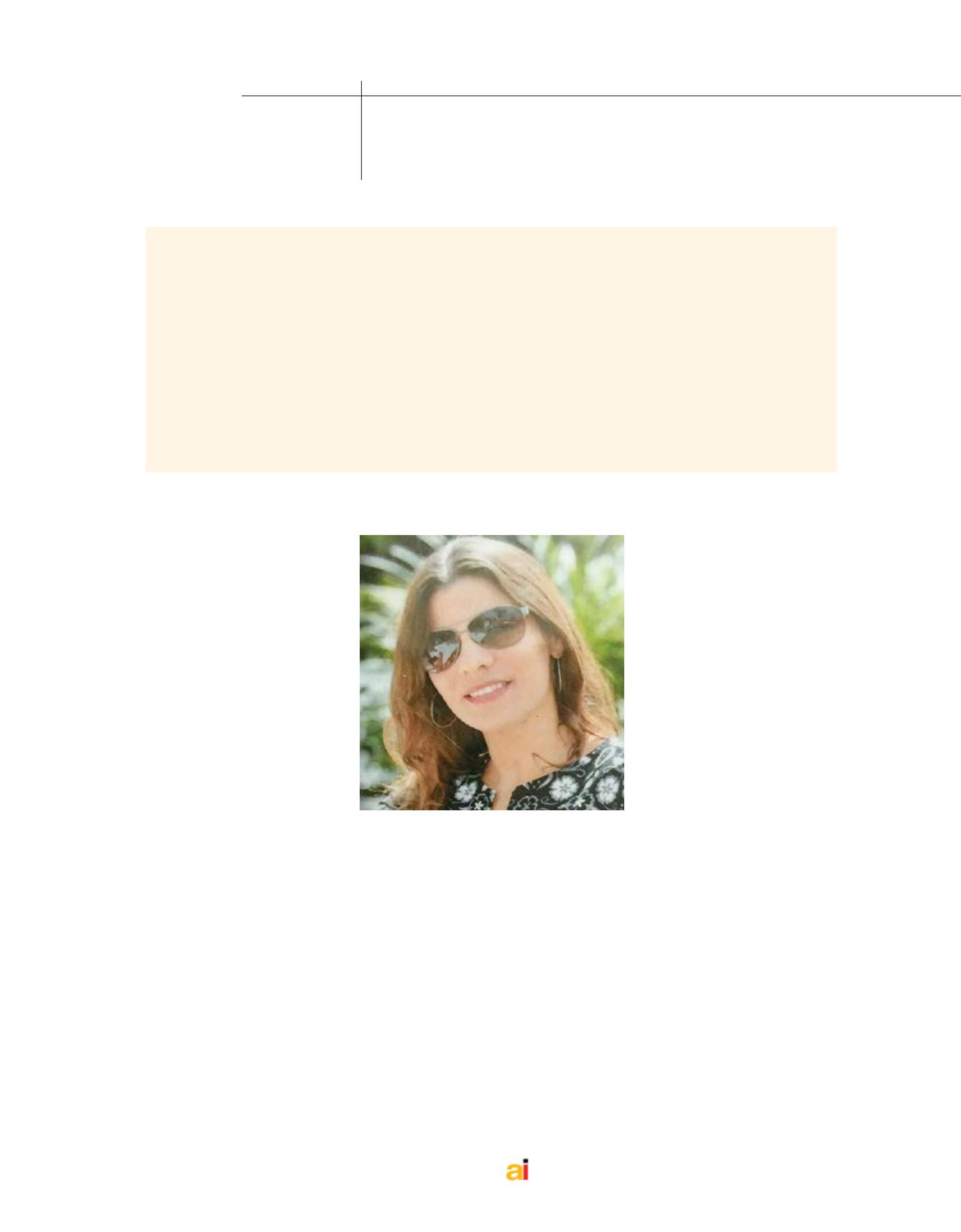
the designer to put herself in the architect’s
shoes, although not without challenges.
“I was given a cold, hard structure and felt
my main task was to imbue it with warm
vitality. I grew up on a kibbutz and a sense
of spaciousness was intrinsic to my way of
thinking as a designer.
house of the season
warm smile
anonymous cube
Shira Shenton
If one word could accurately sum up the architecture of the 21st century,
it would be “confusion”. On one hand, unlimited design capability enabled
on the smart screen that travels everywhere with us, and on the other – a
nostalgic yearning for something personal and stable, to reconnect with
our unique identity - gone missing in the global reality.
Previous to this was a return to the Modernist sanity of the 30s’ with the act
of a restart after three decades of painfully Post-Modern shrillness, which
flooded the world with the meaningless fantasies of architects and their
clients, both screaming out their suppressed aspirations.
The question I asked myself was how
to reconcile my personal aspiration for
freedom, with the client’s declared need for
intimacy.
“I felt that this severe looking house needed
a little conceptual flexibility – and some
design humor to give it a home-like sense
of warmth. An almost instinctive answer was
to mark a focal point with stigma free lines.
“This stands out especially when entering
the house and a linear lighting fixture above
the dining area gives the space a presence,
reminiscent of my childhood games – five
sticks, ladders we used to climb to high,
forbidden places… and Hora dancing.
“On some of the white walls I put pictures
of world cities to give significance to
rooms lacking identity. For this, colors and
materials were carefully chosen to suit the
different users’ - ‘going with (aspirations)
and feeling without’ in the spatial openness
and functional intimacy.
“This is clearly expressed in the balance
of relations between the purple wall on
the living room floor, while allowing each
bedroom to be decorated according to
its owner’s personal choice. Within this
frame, the house owner was given special
attention, letting him influence the design of
shelves in the basement – a type of bar that
deliberately deviates from wall limitations,
an elegant successful attempt to think out
of the box.
Interior Design:
Alejandra Oren.
Architect:
Dan and Hila Israelevitz
Alejandra Oren
69