


 24 / 96

Architecture of Israel #
117
|
May
2019
|
Ramon International Airport
page
english readers
The 5,500 dunam compound includes a
50,000 sq.m terminal; 3,600 m. runways,
and a coordination center above which is
a 45 meter high observation tower. Two
open, supporting areas on each side of
the terminal, resemble shaded desert
tents, under which all functional jobs are
conducted.
Uniform design language, implemented
in all components - interior and exterior -
creates an architectural say, providing the
airport with the unique representational
outlook of an international airport. This in
addition to its relative proximity to popular
tourist destinations, such as Eilath, the
Dead Sea, Aqaba and Northern Sinai,
as well as operational compactness with
suitable, low cost flights.
The wild desert with the Edom Mountains
and the interweaving wadis with their
mushroom-like rocks, inspired the
symbolic yet functional design. Made
of triangular, isolated aluminum panels
above a steel and concrete skeleton, the
terminal envelope is self-shading and
forms a pleasant well-lit inner space.
The opaque mass was intermittently "torn"
off to install glazed openings allowing the
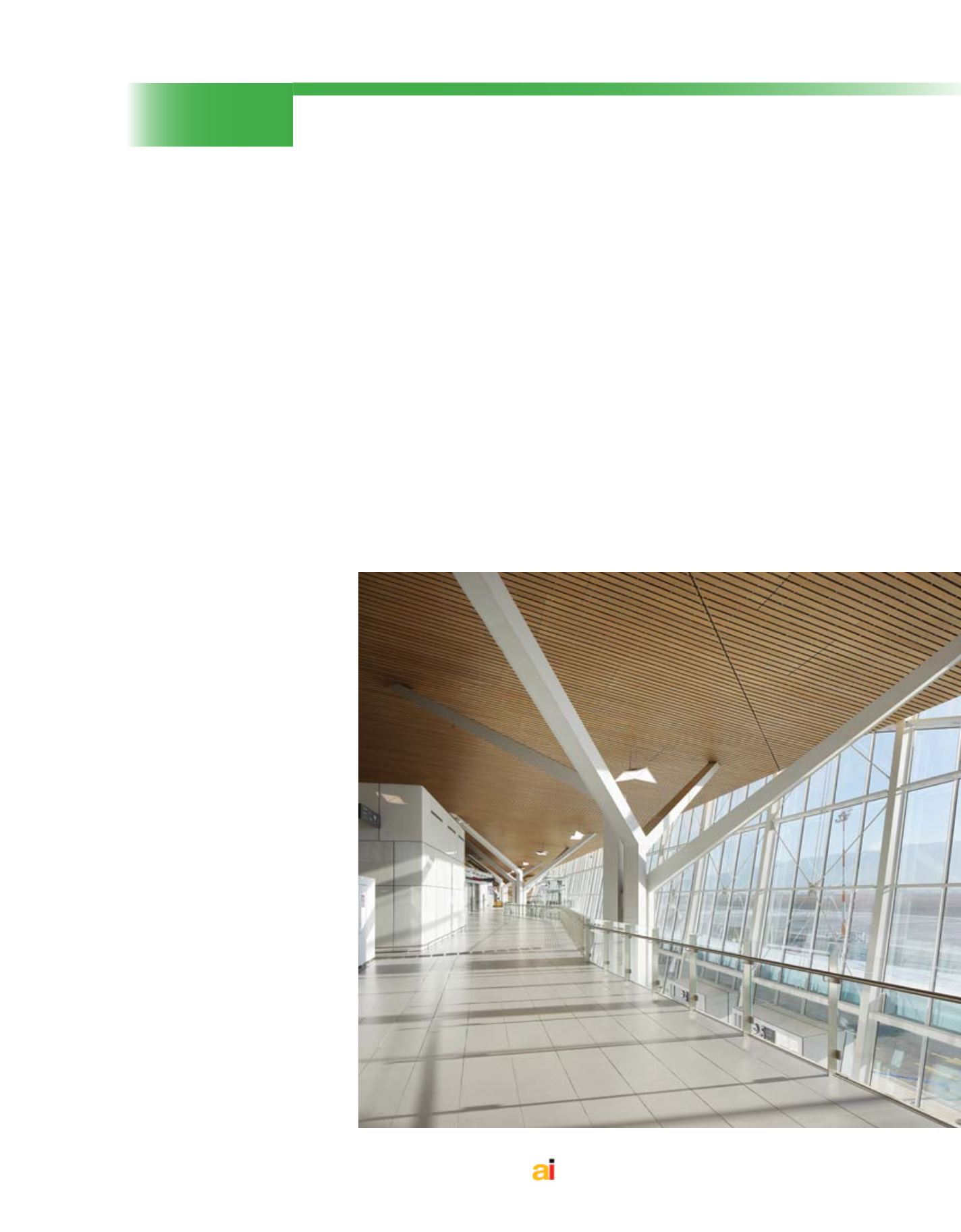
penetration of natural light. Glass walls
were also used to distinguish between
air operational areas and public areas,
directing passengers' movement, while
allowing them a view of the spectacular
desert.
Inside, a bamboo clad ceiling supported by
columns resembles acacia trees, providing
a warm and welcoming atmosphere. The
fixed furniture - counters, benches, and
fans - made out of Corian panels and
Goshen wood, are an integral part of the
uniform design language.
off the drawing board
ramon international airport
timna, 2019
Located on Route 90, 16 kilometers north of Eilath, Ilan and Assaf Ramon Airport was
planned and built over a period of 7 years to replace the local Eilat airport and the
Ovda Base Airport providing international flights. With its innovative and prominent
design, the airport will function as Israel’s southern gateway, expected to serve 2.5
million passengers in its first stage and 4.5 million in the future. All will share waiting
halls and commercial services common to departures and entries on domestic and
foreign flights.
Landscaping and particularly parking
lot lines were inspired by desert-stream
estuaries, and excavated materials
shredded at the on-site plant were utilized
to pave roads and runways.
Seeds of local vegetation were collected
during construction, sprouted and nurtured
to be restored to their natural environment
as part of the landscape architecture.
Planned and built from scratch, the airport,
including all infrastructures, involved
about 45 consulting companies, and the
job successfully met all timetables and
budget constraints.
שדה התעופה רמון
מבט מהקומה העליונה אל המתחם האווירי, מתחת לתיקרת הבמבוק.
אמיר מן, ארנה צור, עמי שנער אדריכלים.
תכנון:
אמיר מן
ראש צוות תכנון:
Hufton+Crow
צילומים:
73
Architects:
Amir Mann, Moshe Zur,
Ami Shinar, Orna Zur Architects.
Design Manager:
Amir Mann.
Photos:
Hufton+Crow.